Skip to content
Billionaires Digest
My team

Thursday, October 22, 2026Oct 22, 2026 · morning edition

Top story

Meta's profit sinks on a $9.9 billion legal charge

Meta's ad business grew 26% in the third quarter, but a settlement with state attorneys general over teen safety wiped out most of the profit gain.

Signal feed

6 moves
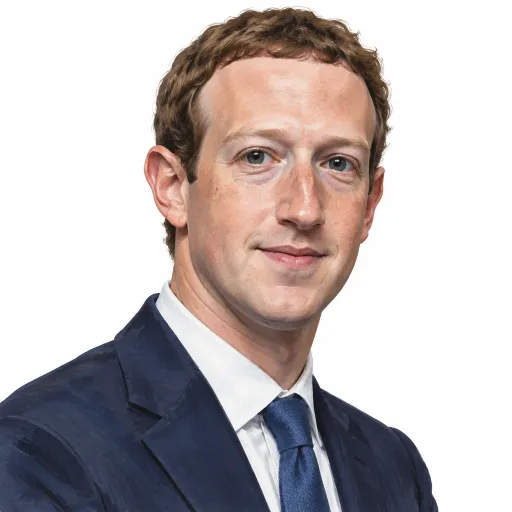
Mark ZuckerbergOtherAI & techMETAAI read · ▲ Beat the headline, missed the footnote

Meta's profit sinks on $9.9 billion legal charge

The move

Meta reported third-quarter 2026 results on Oct. 21: revenue of $64.6 billion, up 26% from a year earlier, including $63.1 billion in advertising revenue. Diluted EPS was $3.83. Operating income fell 37% to $12.99 billion and operating margin narrowed to 20% from 40%, after Meta booked a $9.89 billion charge tied to its August 2026 settlement with attorneys general from 52 states and territories over teen mental health and social media. Excluding that charge, operating income would have risen 11% to $22.88 billion. Meta guided to $73-76 billion in fourth-quarter revenue, and shares rose in extended trading.

Why it matters

Strip out the one-time legal charge and the core ad business is still accelerating, which is likely why investors looked past a headline profit number that was far weaker than the revenue growth.

The bear case

A $9.9 billion settlement for alleged harm to teen users is real money leaving the company, not an accounting footnote, and it follows cuts that have already left headcount 12% smaller than a year ago.

What to watch

Whether Meta's $73-76 billion fourth-quarter revenue guidance holds, and how heavy AI infrastructure spending affects free cash flow, which was negative $2.1 billion this quarter.

Mary BarraOtherAutosGMAI read · ▼ Beat the quarter, missed the mood

GM beats on earnings, stock sinks on soft guidance

The move

GM reported third-quarter 2026 results on Oct. 20: revenue of $50.0 billion and adjusted EPS of $3.70, both ahead of the roughly $3.69 analysts expected. The board approved a new $20 billion share buyback and declared a quarterly dividend. But GM narrowed its full-year adjusted EPS guidance to $12.75-$13.75, a range whose midpoint sits below the $13.42 analysts had expected, citing higher raw-material costs. Shares fell 6.84% to $77.09, their worst single-day drop in about 15 months.

Why it matters

Investors looked past the earnings beat and focused on guidance that came in below consensus, a sign Wall Street is more worried about next year's cost pressure than this quarter's results.

The bear case

A $20 billion buyback and a dividend are real cash returned to shareholders, and the guidance cut reflects known raw-material costs rather than any sign of weaker demand.

What to watch

Whether GM's full-year results land nearer the top or bottom of its narrowed $12.75-$13.75 EPS range.

Source · Investing.comRead original ↗Report an error
Masayoshi SonOtherAI & techSFTBYAI read · ▼ Credit markets flashed first, equity followed

SoftBank's market value halves from its June peak

The move

SoftBank Group shares fell 6.86% to 4,305 yen on Oct. 22 in Tokyo, part of a broader sell-off in Asian tech and chip stocks that also hit Samsung, SK Hynix and Kioxia. The drop leaves SoftBank roughly 50% below the record high it set on June 2, a slide tied to investor worry over its heavy borrowing to fund AI bets, including its OpenAI and Arm stakes. The Nikkei 225 fell 2.65% the same day, its first close below 63,000 since mid-September, and South Korea's Kospi dropped 3.52%.

Why it matters

SoftBank's own share price is now reflecting the same AI-financing worry that has already pushed up the cost of insuring its debt against default this month.

The bear case

A single volatile trading day doesn't erase SoftBank's underlying stakes in OpenAI and Arm, and the stock has swung sharply in both directions all year on shifting AI sentiment.

What to watch

SoftBank's next quarterly results, due Nov. 10, for an update on how its AI bets and borrowing are performing.

Elon MuskOtherAerospacePrivateAI read · — Stated intention, no mechanism yet

Musk pledges a free SpaceX share to every US kid

The move

Elon Musk said on X on Oct. 19 that he will give every child under 18 in the US a share of SpaceX next year, valuing the gift at about $10.7 billion based on a $147.96 per-share price. The announcement follows SpaceX president Gwynne Shotwell's pledge the week before to give more than 2 million kids a share of her own SpaceX stock through a Trump Account, which she said would favor families near SpaceX's central Texas operations.

Why it matters

Giving away SpaceX equity to children, rather than selling it, keeps the stock in long-term hands while building goodwill for a company that has drawn local opposition and lawsuits over its Texas operations.

The bear case

The announcement sets no firm date, exact share count or distribution mechanism, so for now it is a stated intention rather than a completed transaction.

What to watch

Whether Musk or SpaceX files any concrete distribution plan, and how many shares are ultimately set aside.

Ken GriffinOtherFinancePrivateAI read · — Calls the top, keeps trading

Griffin calls AI 'almost certainly' a bubble

The move

Speaking at Citadel Securities' Future of Global Markets conference in New York on Oct. 20, Ken Griffin said AI is "almost certainly" in a bubble, comparing it to the dot-com era, but stopped short of predicting a collapse. He said "corporate America has been very uneven in its ability to extract value from its AI models," and that businesses are scrutinizing their spending on services from OpenAI and Anthropic. He said companies that come out ahead of a bubble tend to lead markets for decades.

Why it matters

Griffin is one of the most closely watched voices in markets, and his comments show even a prominent AI bull now treats a bubble as the base case, not a fringe worry.

The bear case

Griffin's own argument is that bubbles and genuine technological transformation often happen together, and he says AI, like the internet before it, could still produce market leaders for decades even after a bubble bursts.

What to watch

Whether other major investors echo Griffin's bubble call, and how AI-heavy stocks trade into year-end.

Ken GriffinPropertyReal estateVNOAI read · ▲ Biggest tenant becomes majority owner

Griffin, Vornado close $3.3B tower deal, Citadel leases it

The move

Vornado Realty Trust, an affiliate of Ken Griffin, and Rudin announced on Oct. 21 that they closed their joint-venture deal for 350 Park Avenue, a 66-story, 1,400-foot tower in Manhattan designed by Foster + Partners. Griffin's affiliate holds 60% of the venture, Vornado 36% and Rudin 4%. Citadel Enterprise Americas signed an anchor lease for 1.05 million square feet in the building, and the venture closed a $3.3 billion construction loan from a group of banks including Wells Fargo, JPMorgan Chase and Bank of America.

Why it matters

Griffin isn't just leasing space for Citadel, he is financing and majority-owning the building itself, a sign he is betting on Manhattan office real estate even as some investors worry about office demand broadly.

The bear case

A 66-story tower anchored by a single tenant concentrates risk in Citadel's own continued growth and lease commitment, and a project this size carries years of construction and cost risk.

What to watch

Construction progress on the tower and whether other tenants sign on for the remaining space.

← All editions